

When I was nine, my mom died. I cried, mainly because my older siblings cried. Really, I didn’t grasp the import of dying. So, befuddled by myths that my Catholic upbringing fostered, I took refuge in hope that Mamma would reappear to me some day; I prayed hard, as only a gullible child can pray. But I never saw my mother again. As I grew older and more people died around me, a gnawing fear of death grew in me. What with all the crying, praying, and singing that attend vigils for the dying, and the “holy water”-cum-incense abracadabra of priests and nuns and their weepy flock who perform last rites for dying people, wake-keeping in Nigerian is a seriously spooky affair to the callow psyche of a child. None of the myriad horrors we harbor as mortals comes close to our dread of death: that inevitable end.
Religion is nothing but a crock used by people to fortify themselves against the frightening prospect of death, that chillingly inevitable end of life—just as a weak-willed person might fortify himself and steel his nerve with booze before taking a daunting action. And when death impends, be that at war, in hospital, or on death-row, people cling more desperately to that delusion. Even non-believers walk on eggshells when faced with a dying person who clings to faith. But we do so for humane reasons. Out of a sense of decency (which evangelical believers lack) we wonder: Is this really a good time to tread on sensibilities and disabuse the dying of their delusion? But then, I wonder, when is a good time?
Not long ago I found myself in that quandary. Someone I knew was dying, and I went to her deathbed to pay my respects. She was a woman who respected me as an elder of the Nigerian community in Cleveland. She was also something of a protégé, having sought my advice repeatedly as she considered the proper advanced-degree path to pursue. In my days as a scientific educator—when, also, two of my sons were in the university—I had become something of an information resource for my fellow Nigerians on matters like the choice of college to attend and the discipline of study, and especially how to tap into financial assistance programs available to good students and their parents in the USA.
I chose to go and see her during a slow time, when most of her friends and well-wishers would be at work. I was wary of the perplexed reactions of my fellow Nigerians when it became known I am an atheist. “Atheist?” I was asked now and then. My friends told me I would come across much better as an agnostic or a pagan than an out-and-out atheist, for Nigerians are often ranked alongside Americans in sheer religiosity—of the pushy and loud sort. It’s amazing that the very people whom religion has historically oppressed and denigrated the most (i.e. women, blacks, colonized people) are the ones who cling to it most tenaciously! The Nigerian media go so far as to estimate that one in three houses in the cities and townships of the Christian south of the country are used nowadays as churches, chapels, temples, tabernacles, or other places of worship.
I am an anomaly, for a “Nigerian atheist” is considered an oxymoron. Those who know I was raised a Catholic—and, to boot, an altar boy able to recite the entire Eucharist liturgy in Latin and English—profess themselves baffled by my apostasy. (Yes, I accept this term, but not as a pejorative.) It doesn’t help matters that Nigerians begin and end every gathering with prayers—even dancing parties; or that some of them look askance when I pointedly refrain from participating in praying. So I usually strive to arrive and leave at times calculated to avoid the prayer parts of the proceedings. This time I had no wish to get caught up in another Nigerian-style Via Dolorosa. Still, when I arrived a death watch was starting: a few women were gathered in her kitchen, talking in subdued tones—some silently mouthing prayers.
This visit was fraught. We all knew she was dying, having been discharged from hospital with IV-Stage cancer and no prognosis. She would be the sixth friend or close acquaintance of mine to die from a painful, wasting illness. One lesson I learned from experience is that people in the throes of dying are aware of the fact, but cling tight to life in desperate denial. If you make eye contact they scan your face eagerly for any signs that you share their hopes—or fear the worst. In such dire straits, the religious indoctrination of believers dredges up expectations of miracles. Nigerian prayer vigils give voice to that delusion with a lively chant, “He’s a miracle-working God.”
This visit to my dying friend evoked a déja vu. It had happened to me once before and that first time was unnerving. Another lady, who along with her husband was very close to my wife and me, had wasted to mere bones as she succumbed to breast cancer. On the last evening we spent in her home I sat by her bed through the dead of night and, after some reminiscence and thrust-and-parry, she challenged me to acknowledge I knew she was dying. I wouldn’t lie to her: she was among the sharpest persons I ever knew, and she’d know when I was lying. So, I nodded, too full of grief to voice out my acknowledgment. She then made me promise that my wife and I would keep an eye on the raising of her four little sons, one of whom I had accepted as my “godson” at his baptism—in a time before my open break with such nonsense. Her husband said later that she had rested better after that chat.
And now here in Cleveland was a reprise of the same awkward and close encounter with the dying. Since I hadn’t seen this lady in a couple of years, we started off with banter to catch up on news of our respective families. A few of her lady friends drifted into her bedroom to minister to her needs as we chatted—for she was bedridden and swollen up all over, like a baobab tree trunk. She had moved in swank circles in her time, and so these friends of hers were quite elegant. When she saw me eying them appreciatively she quipped that she hoped I had not come just to hit on her lady friends. I denied it, and we laughed. The mood lightened a bit.
But then she dropped a brick. “May I sing a song for you?” she asked.
I was nonplused. A simple request it was, yet loaded—perhaps deliberately so. She could have asked me to sing to her; or she could have gone ahead and sung without seeking my approval first. The friends who attended her had worried aloud that my visit was tiring her out: she hadn’t much energy left, was often wracked by severe bouts of pain, and occasionally became incoherent. So I understood her offer to sing to me was a big courtesy—if she wasn’t testing me and if she was lucid. Still, I had an idea what kind of song would come most easily to her in her current state. Looking her calmly in the face, I said, “Yes, as long as it is not a religious song.” She looked at me silently, like someone reprimanded, and looked away. I felt as if a child had offered to sing for me and I had turned her down. Our conversation became desultory, and I knew my visit was over. When an aide came in to massage her swollen feet I left her room to spend some time with her two college-age sons, whom I was meeting for the first time.
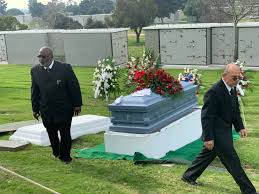
Two days after that visit the lady died. A memorial gathering was held for her. As usual it was a psalm-and-hymn affair. I attended, but evinced my usual aversion to religious pretences. (That was not easy to do; but, I don’t “go along to get along” any longer; my tolerance for humbug has gone into free-fall lately.) At the end, one of the lady’s sons came up and expressed his appreciation for the fact that I had come (and had also supported them in other ways) even though I am an atheist. I asked how he knew I was an atheist. “Well, mommy told us, after your visit to our home.” That was a relief. Apparently, then, my dying friend had not held it against me that I refused to hear her swan song unless it was a secular song. What a lady!
Nevertheless, I wonder, each time I recall that farewell encounter, whether I should have eased our final leave-taking by humoring her with acquiescence in her fervent but nonsensical belief. I knew that at that moment, when she was nosing down the final descent into that gentle goodnight, nothing was more important to her than comfort—both physical and emotional. As I left I worried that I might have disturbed her emotional comfort. Did I do right?
As long as my friends are of sound mind and body, whenever they challenge my unbelief I respond immediately to make them see the merits of freeing their thinking from the fetters of dogma; such freedom can only improve their outlook on life and living. But that’s just the point: When someone’s life is manifestly at its end, when there’s no more living to do, what’s to gain from knocking down their foolish props? On the other hand, while dying is the most somber part of living, is that adequate reason to mystify it with mumbo-jumbo—or to encourage others to do so? Must we forever abandon the service of hospice to snake-oil purveyors, just because their ware might work as a placebo? Soothing or not, a fairy tale remains a fairy tale!
Linus Thomas-Ogbuji

